The math is getting tougher. The number of US auto-mechanic businesses has climbed nearly 12% since 2018, reaching almost 299,000 shops nationwide according to Cox Automotive's 2026 study. More competitors, same pool of local vehicle owners.
Relying on walk-ins and word-of-mouth used to work. It doesn't anymore — at least not consistently enough to keep bays full every week. Shops need a proactive, trackable marketing plan across multiple channels.
This guide covers building a converting digital presence, generating reviews, running paid ads, retaining customers, forming local partnerships, and tracking what actually works.
Key Takeaways
- Local SEO and Google Business Profile optimization put your shop in front of drivers already searching for repairs
- Online reviews often decide whether a prospect calls you or the shop next door
- Paid ads (PPC, geofencing, social) fill short-term gaps while organic channels build lasting momentum
- Loyalty, referral, and follow-up programs turn one-time visits into repeat revenue
- Cost-per-lead and customer lifetime value show which channels deserve more budget
Build a High-Converting Digital Presence
Nearly 84% of consumers researched a local business online within the past three months, according to BrightLocal's 2026 local SEO statistics. For auto repair, that means your website and search visibility function as a 24/7 storefront, often the deciding factor before a customer ever dials your number.
Create a Website That Turns Visitors Into Appointments
A cluttered homepage causes prospects to bounce before they even see your services. Keep the messaging simple: who you are, what you fix, and how to reach you.
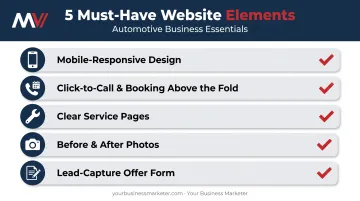
Every high-converting auto repair website needs:
- Mobile-responsive design: most searches happen on a phone in a parking lot or driveway
- Phone number and online booking button above the fold: no scrolling required
- Clear service pages for each major repair category
- Before/after photos that build visual trust
- A lead-capture form tied to a specific offer (like $20 off an oil change)
Win Local SEO Rankings for "Auto Repair Near Me" Searches
Broad terms like "auto repair" pull in tire-kickers. Hyper-local, service-specific keywords (think "brake repair in Akron" or "check engine light diagnostic Cleveland") attract people ready to book.
Build a dedicated page for each:
- Core service (brakes, transmission, oil changes, diagnostics)
- Vehicle specialty (if you focus on European imports or diesel trucks)
- Symptom-based query ("why is my car shaking at highway speed")
That last category matters more than it used to. Cox Automotive found 16% of service customers now use an AI tool during their research process, while BrightLocal reports AI use for local business recommendations jumped from 6% to 45% in a single year.
Symptom-based content captures both traditional Google searches and these newer AI-assisted queries. A shop that answers "why does my steering wheel shake when I brake" earns visibility in both worlds.
Optimize and Maintain Your Google Business Profile
A complete, accurate Google Business Profile (hours, categories, photos, services) helps your shop rank in the Google Maps 3-pack, which appears above organic results for most local searches. Google itself states that businesses with complete and accurate information are more likely to appear in local search results, and incomplete profiles can be filtered out of relevant searches entirely.
Keep your business name, address, and phone number identical across Google, Yelp, and every other directory. Inconsistent listings confuse Google's ranking algorithm and can quietly tank your visibility.
This kind of technical, ongoing work is easy to let slide when you're running a busy shop floor.
Your Business Marketer (YBM), a Hudson, Ohio-based agency, has spent nine years handling SEO, Google Business Profile management, and site optimization for automotive and home service clients across Ohio and the Midwest. Shop owners get the visibility work done without managing it themselves.
Win Trust With Online Reviews and Reputation Management
Reviews carry serious weight when drivers choose a shop. BrightLocal's 2026 Local Consumer Review Survey found 97% of consumers read local business reviews, 41% always read them, and 68% won't even consider a business rated below four stars.
For a repair shop, a steady stream of recent 4- and 5-star reviews isn't optional. It's the credibility signal prospects use when they compare you to every other shop nearby.
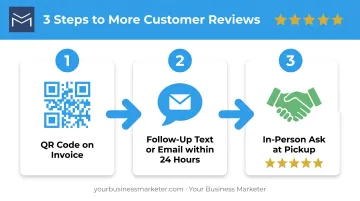
Build a simple system for requesting reviews:
- QR code on the invoice — customer scans it before they leave the parking lot
- Follow-up text or email sent within 24 hours of service completion
- In-person ask at pickup — train advisors to mention it when handing over the keys
Never offer incentives tied to a specific star rating. That violates most review-platform solicitation rules.
Responding professionally to negative reviews matters just as much as collecting positive ones. Acknowledge the issue, apologize where warranted, and offer to make it right. Prospects reading that exchange see a shop that's accountable, not one that pretends every job goes flawlessly.
Use Paid Advertising to Keep Your Bays Full
Organic SEO builds long-term visibility, but paid advertising fills gaps fast, especially during slow seasons or when you're launching a new service line.
PPC: Bidding on High-Intent Searches
Pay-per-click means bidding on keywords like "brake repair near me" and paying only when someone clicks. For auto service specifically, LocaliQ's 2026 benchmarks show:
| Metric | Auto Service Benchmark |
|---|---|
| Average CTR | 4.55% |
| Average CPC | $5.31 |
| Conversion rate | 11.94% |
| Cost per lead | $44.26 |
A dedicated landing page matching your ad's exact offer is non-negotiable. Send a "$20 off brake service" ad to your generic homepage instead of a brake-specific landing page, and you'll waste a chunk of that spend on confused visitors who bounce.
Geofencing and Social Ads
Geofencing draws a digital perimeter around a location, such as a dealership service lane or a competitor's shop, and serves ads to vehicle owners who enter that area. It's a tactic gaining traction as shops fight harder for out-of-warranty vehicles.
Facebook and Instagram ads let you target specific local demographics and retarget people who visited your website but didn't book. Someone who looked at your brake service page last week and sees the same offer again on Instagram is far more likely to convert than a cold prospect.
Budget guidance:
- Start with a modest daily spend ($15–$25) and scale what works
- A/B test ad creative and offers before increasing budget
- Track cost-per-lead, not just clicks. A cheap click that never converts is money wasted
Running PPC, geofencing, and social ads while managing a shop floor is a lot to juggle. Shop owners who hand multi-channel campaigns to a partner stay focused on the bays instead of bid management.
YBM's automotive clients show what that looks like in practice. Restructuring underperforming PPC and social campaigns for a Wisconsin Buy Here Pay Here group drove a 40% traffic increase within 30 days and a 36% year-over-year lead increase. A rural Chevrolet dealership's programmatic and social mix generated 626 online leads and 305 visits over two years.
Turn One-Time Customers Into Repeat Business
Winning a new customer costs more than keeping one. The easiest revenue you'll ever generate sits in your own service history.
Sell previously declined services. Train advisors to follow up on flagged issues from prior visits: worn brake pads, a battery testing low, an air filter overdue for replacement. A simple phone call or text six weeks later often closes work that would otherwise go to a competitor.
Build a loyalty program. Options range from simple punch cards to tiered VIP perks like free tire rotations and priority scheduling. The Bond Loyalty Report found 85% of consumers are more likely to keep doing business with a brand that has a loyalty program, and 73% spend more as a result.
Launch a referral program. Offer a discount or gift card for every referral that becomes a paying customer. Trust is the driver here. Nielsen's global study found 88% of consumers trust recommendations from people they know more than any other channel.
Automate your follow-up. Set up text and email sequences for:
- Service reminders (oil change due, inspection coming up)
- Seasonal maintenance tips (winterizing, AC checks before summer)
- Re-engagement offers for customers who haven't visited in 6+ months
Add personal touches. A birthday text, a branded keychain, or a holiday card keeps your shop top-of-mind between visits.
Get Involved Locally and Build Strategic Partnerships
Community visibility builds trust that ads alone can't buy.
Sponsor local teams or events, and consider hosting workshops. A teen driver safety night, for example, builds goodwill and gives you authentic photo and video content for social media.
Form referral partnerships with adjacent businesses:
- Body shops
- Tire shops
- Insurance agencies
- Independent car dealerships
These relationships send customers in both directions with zero ad spend.
One piece of content from a single sponsorship or workshop can be repurposed across social media, your email newsletter, and a website blog post—turning one afternoon of effort into weeks of visibility.
Track What's Working to Maximize Marketing ROI
None of this matters if you can't tell which channel is actually driving business.
Start simple:
- Use call tracking numbers (a different number per campaign) or a basic "how did you hear about us" intake sheet
- Monitor Google Analytics and Google Business Profile insights for traffic, ad conversions, and search performance
Then go deeper with customer lifetime value. A workable formula for a repair shop:
CLV = (average repair-order revenue per visit) × (average visits per customer per year) × (average years retained)
For example: a customer spending $300 per visit, twice a year, over five years represents $3,000 in lifetime value. That is not just the $300 from their last brake job.
Use that number to set what you will spend to win a new customer. It makes cost-per-lead far more useful than revenue alone.
Frequently Asked Questions
How do I get more customers in my auto shop?
Combine local SEO, an optimized Google Business Profile, targeted paid ads, and retention programs like loyalty and referrals. These tactics compound: each one reinforces the others faster than relying on a single channel.
What is the best marketing strategy for auto repair shops?
There's no single best tactic. A layered approach of organic visibility through SEO and reviews, paid channels like PPC and social ads, and retention marketing performs most consistently across shops of any size.
How much should an auto repair shop spend on marketing?
There's no repair-shop-specific benchmark, but The CMO Survey puts average marketing budgets around 9% of revenue. Many small local service businesses start lower and scale spend as campaigns prove ROI.
How can I get more Google reviews for my auto shop?
Put a QR code on every invoice, send a follow-up text or email after service, and respond to every existing review, positive or negative. Consistent responses signal to Google and prospects that you're engaged.
Is social media marketing effective for auto repair shops?
Organic reach alone is limited, but it's valuable for trust-building content like before/after photos and customer testimonials. Pairing organic posts with paid social ads maximizes reach to new, local customers.
How do I track ROI on my auto repair marketing efforts?
Use call tracking numbers, UTM-tagged links on ads and landing pages, and your shop management software together. This connects each lead and completed repair order back to the specific campaign that generated it.